Best Hearing Aids for 2027: Five Recent Models to Compare
Compare recent hearing aids from Phonak, Oticon, Starkey, ReSound and Signia, and learn what 2026 research says about hearing care.
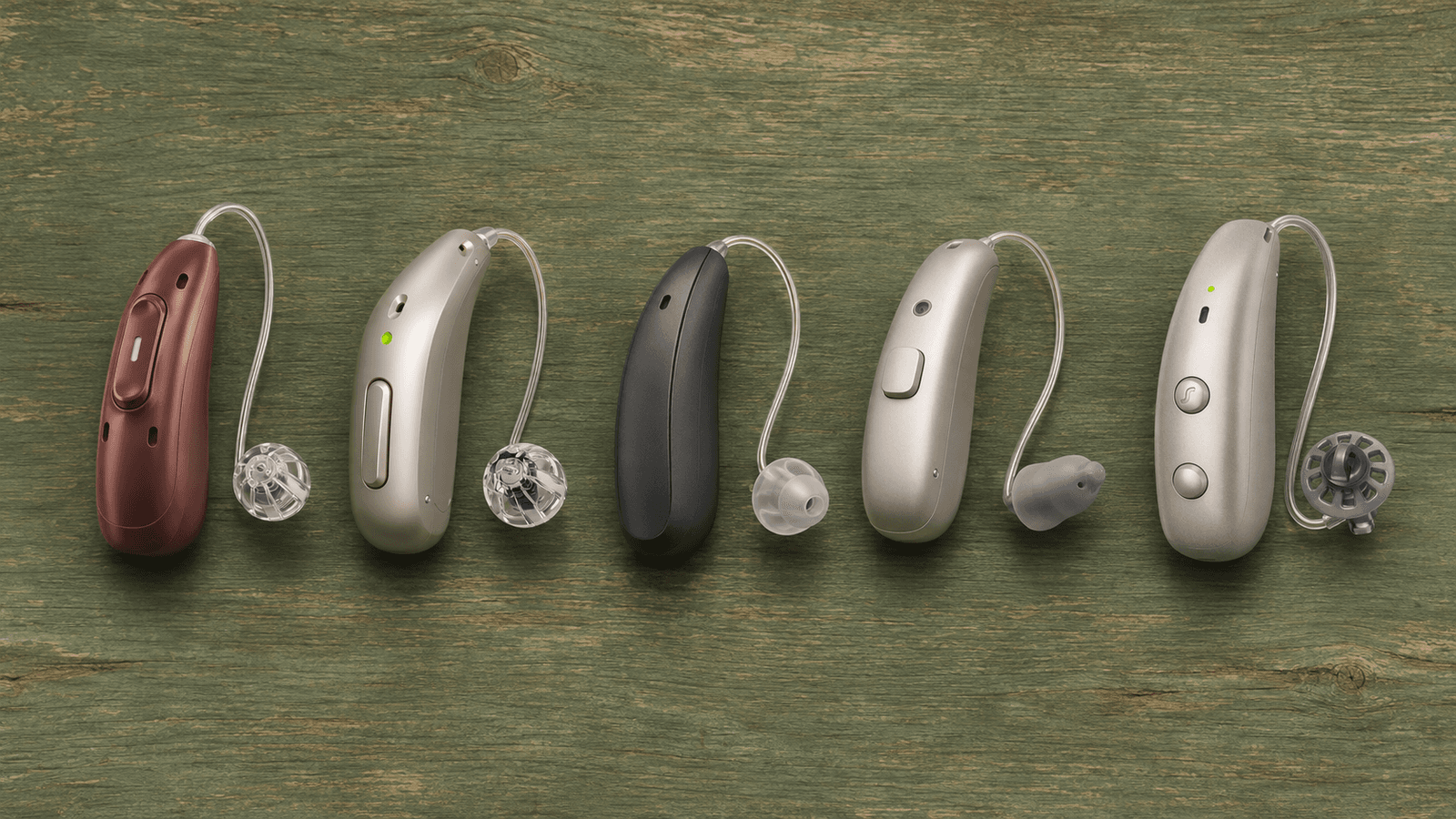
If you are comparing the best hearing aids for 2027, start with how you hear and where you want help. Phonak Audéo EON Sphere, Oticon Reveal, Starkey Omega AI+, ReSound Sensia and Signia Pure Charge&Go MaX are five recently introduced options to discuss with an audiologist. Each takes a different approach to sound processing and connectivity.
Four of these families appear in our 2026 comparison; this update adds Signia. They remained current in U.S. manufacturer information checked on November 20, 2026. This is a feature comparison, not a ranking based on independent head-to-head testing. Other current premium options include Widex Allure AI RIC; the five below do not cover every choice.
Five Recent Hearing Aids to Compare
The descriptions below reflect manufacturer information. A feature can be limited to a particular style or technology level. Confirm current availability and the specifications of the exact device before buying.
Quick Feature Grid
This grid shows features listed by each manufacturer. It does not rank sound quality or show how well a feature works. Confirm the exact style, technology level and phone compatibility before choosing.
Feature | Phonak Audéo EON Sphere | Oticon Reveal miniRITE R | Starkey Omega AI+ | ReSound Sensia | Signia Pure Charge&Go MaX |
|---|---|---|---|---|---|
Rechargeable option | ✓ | ✓ | △* | △* | ✓ |
Bluetooth audio streaming | ✓ | ✓ | ✓ | △† | ✓‡ |
Auracast available now | ✓ | ✓ | ✓ | ✓ | ✗§ |
Telecoil or hearing-loop support | ? | ? | ? | ? | ?¶ |
Key: ✓ listed by the maker; ✗ not available at the source check; △ varies by style; ? not stated in the reviewed source.
- Some Omega AI+ styles are rechargeable. Sensia rechargeable choices also vary by style. † ReSound lists Bluetooth LE Audio for Sensia styles except Custom CIC. ‡ Signia's U.S. compatibility checker includes MaX. Confirm streaming with the exact phone and configuration. § Signia's U.S. support page says its hearing aids do not currently support Auracast. ¶ The U.S. product information reviewed does not confirm telecoil support for these models.
For a deeper explanation of how the broadcast works, read What Is Auracast? A Deep Dive Into Bluetooth Broadcast Audio.
Phonak Audéo EON Sphere
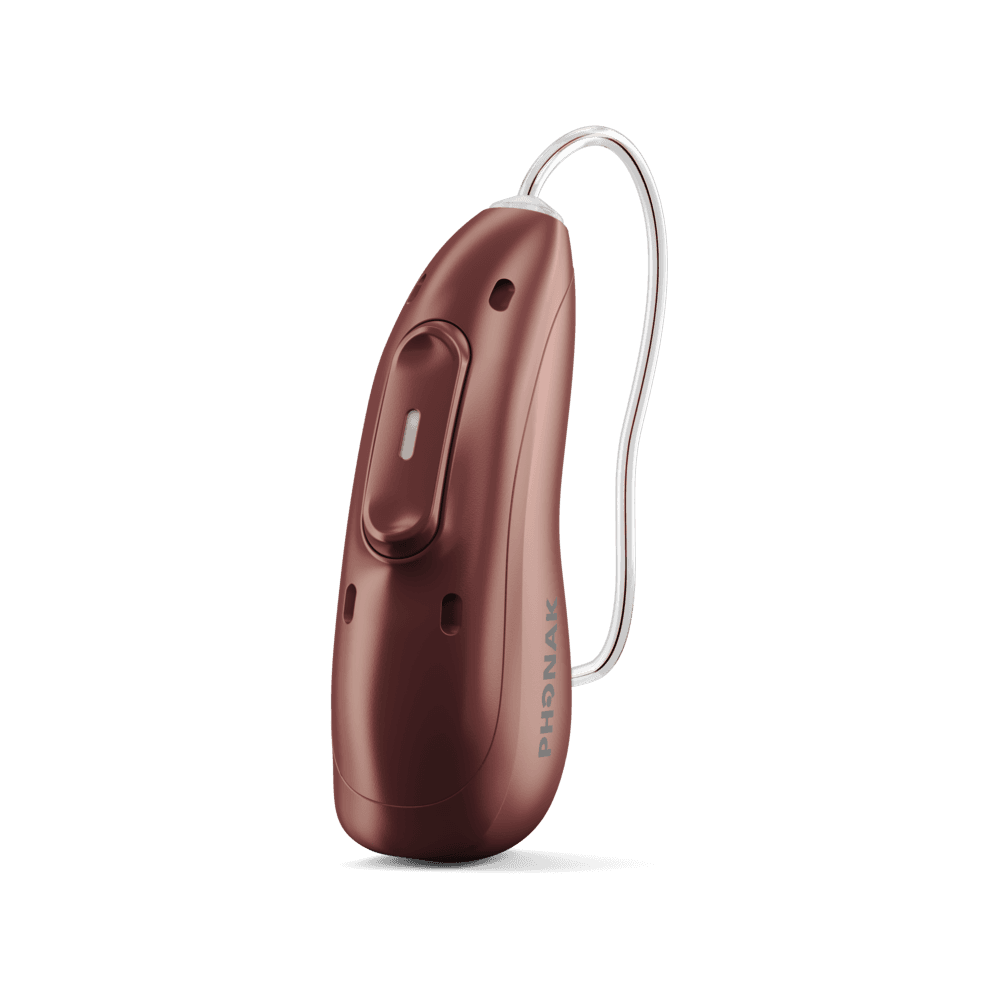
Photo: Phonak.
Phonak's rechargeable receiver-in-canal model uses its HYPERSONIC chip, Spheric Speech Clarity 3.0 and AutoSense OS AI 8.0. Phonak describes processing intended to separate speech from background noise and adapt to different listening environments. It also lists Bluetooth connectivity and Auracast broadcast audio support.
Consider asking: Will the exact configuration connect to your phone and accessories, and how does it sound to you in a busy room? Auracast requires a compatible broadcast and supported device configuration. Battery life depends on settings, streaming and use.
Oticon Reveal
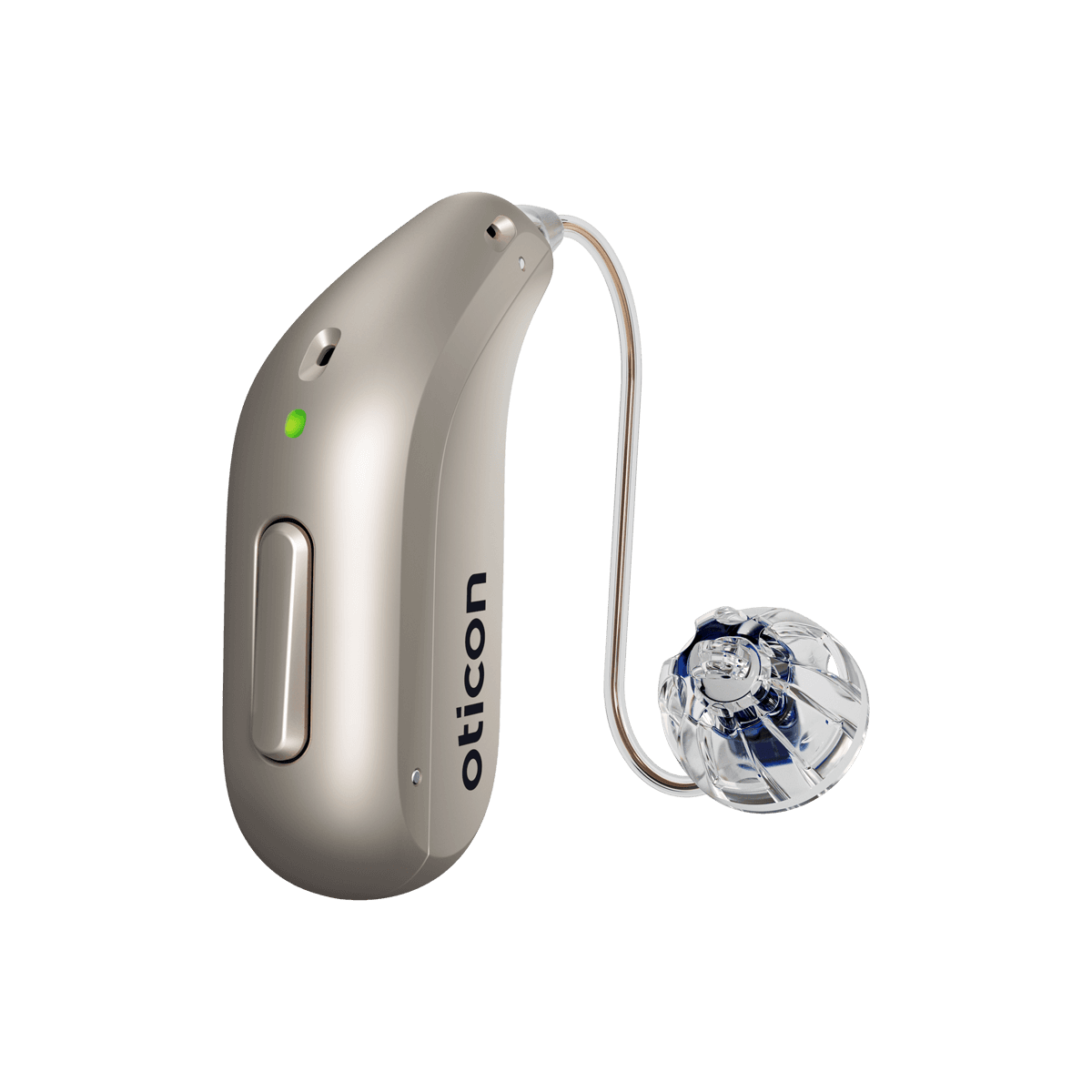
Photo: Oticon.
Oticon describes Reveal's Dual AI system as combining speech processing with processing intended to preserve surrounding contextual sounds. Its rechargeable miniRITE design supports Bluetooth LE Audio and Auracast. These features aim to balance a conversation with awareness of other sounds; they do not guarantee that every voice will be clear in every setting.
Consider asking: Can you try the setting in both a quiet conversation and a busy environment, and does the available style work with your phone?
Starkey Omega AI+
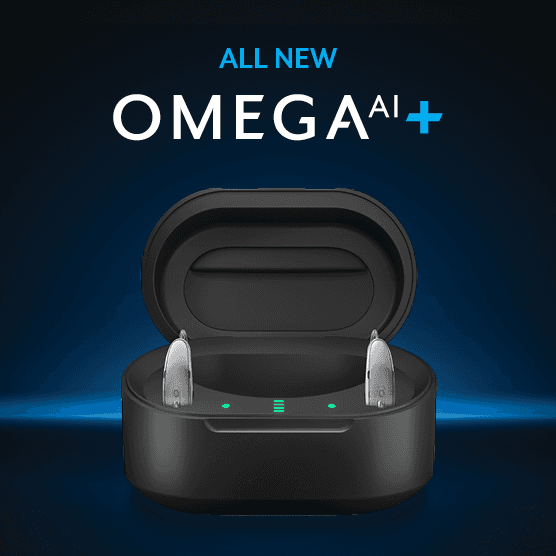
Photo: Starkey.
Starkey says Omega AI+ uses four deep neural networks, a type of AI processing, and a DNN Dual Compressor to adjust sound. The family includes receiver-in-canal and custom styles; the manufacturer also lists Auracast support and sleep tracking in its range. Features are not necessarily available on every style.
Consider asking: Which features, battery life and wireless functions apply to the specific style that fits your hearing and ear?
ReSound Sensia
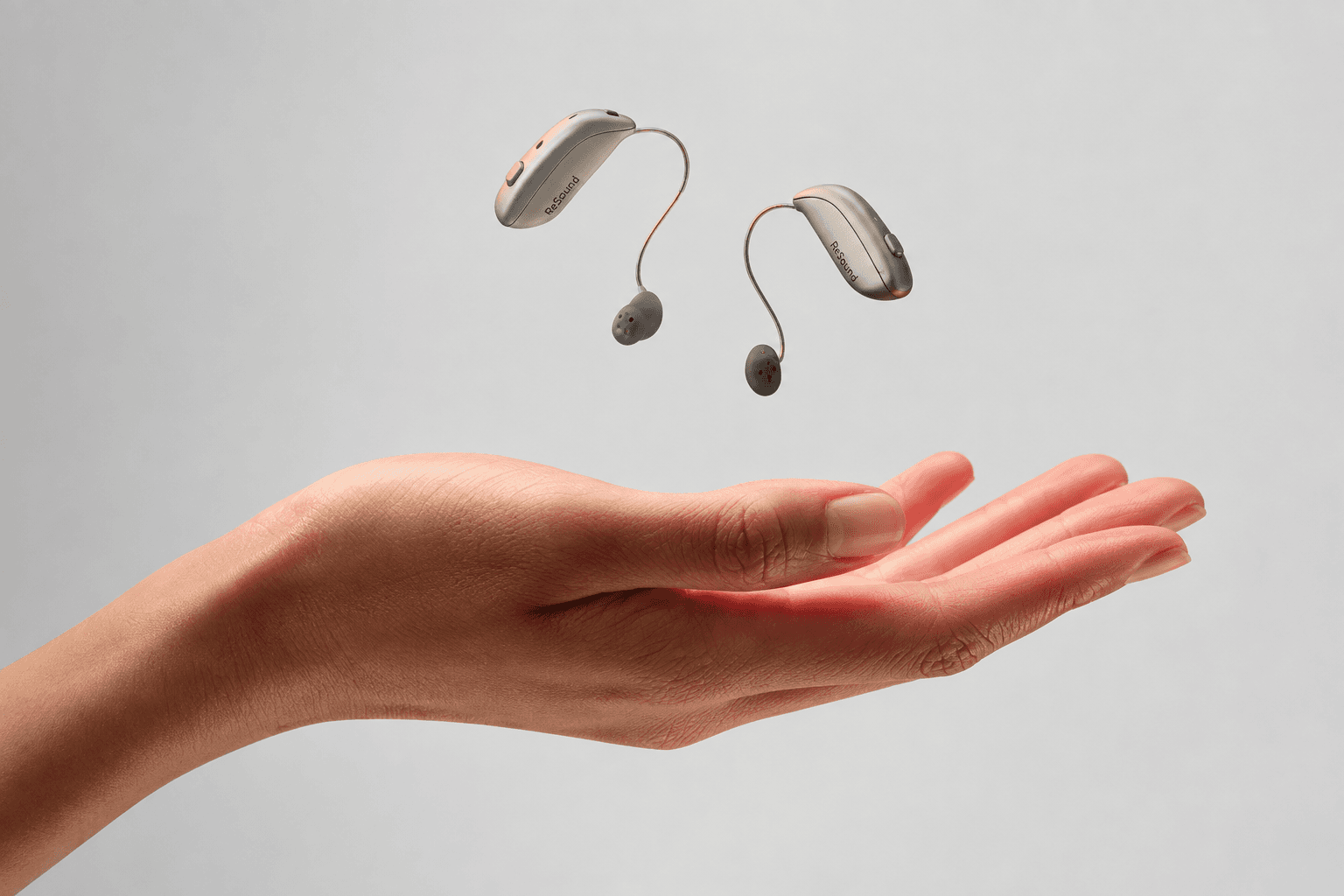
Photo: ReSound.
ReSound says Sensia combines sound-environment classification, four-microphone directionality and neural-network noise reduction. Its Intelligent All-Around feature is limited to the microRIE at technology level 9. The family includes several behind-the-ear and custom styles, with different power and wireless options.
Consider asking: Which style and level are being quoted, and does that combination include the features you want to try?
Signia Pure Charge&Go MaX
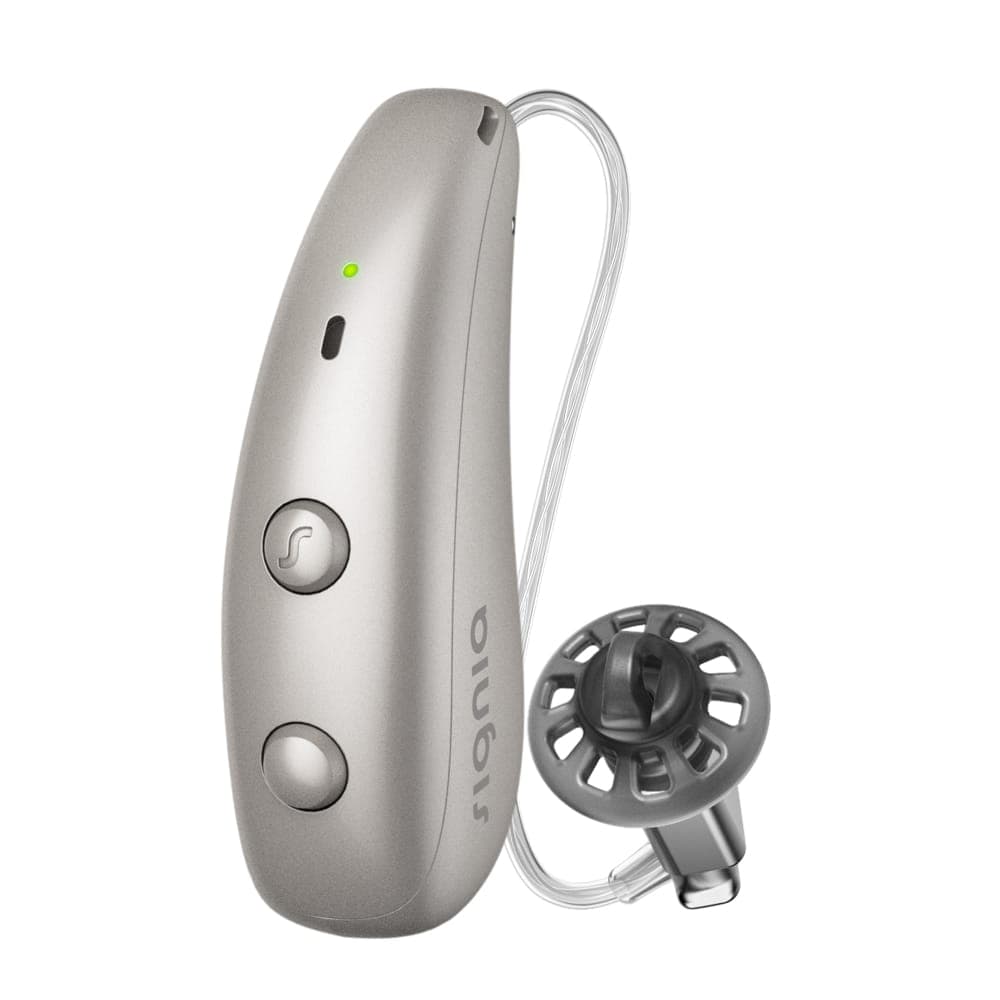
Photo: Signia. This is a manufacturer product image, enlarged for detail; it is not shown at actual size. Original image.
Signia's U.S. product page describes Pure Charge&Go MaX as a rechargeable receiver-in-canal device with processing designed to track conversation partners, handle background noise and adjust the sound of the wearer's own voice. Its U.S. compatibility checker includes MaX, but the exact phone and features still need checking. Signia's U.S. support page says Auracast is not currently supported; do not treat Bluetooth or LE Audio as proof of Auracast access.
Consider asking: Can you try the device in a group conversation, and which phone, app and wireless features work with the exact version you are considering?
What Research Published in 2026 Adds
A 2026 systematic review identified 33 randomized trials involving 4,471 adults. Across the reviewed studies, hearing aids improved hearing-related outcomes reported by participants compared with no intervention or a waitlist. The studies differed considerably, and the review could not produce a pooled estimate for that particular comparison. It did not establish which of the five models above is best, and evidence about long-term and cognitive outcomes remained limited.
A separate 2026 randomized trial studied 80 Kannada-speaking adults with mild-to-moderate hearing loss. The group assigned structured computer-based listening training over four weeks improved on speech-in-noise tests and reported less hearing handicap compared with the group receiving conventional aural rehabilitation. This was one small, language-specific study; it does not show that every training app works or that training replaces an appropriately fitted hearing aid.
Together, these findings support a practical question: what support will you receive after the device is fitted? Your audiologist can discuss whether follow-up adjustments or listening practice may be useful for your goals.
Choose the Fit, Not Just the Feature List
Begin with a hearing evaluation. Your hearing levels, ear shape, comfort, dexterity and listening goals all matter. Describe specific situations, such as a work call, a restaurant table or a conversation while walking outdoors.
Ask how the fitting will be verified. Real-ear measurement uses a small microphone in the ear to check the sound delivered by the hearing aid. The American Speech-Language-Hearing Association describes it as a gold-standard verification method.
Compare the exact style, technology level and quoted price. Bring your phone and ask about streaming, accessories, charging, trial and return terms, warranty, follow-up visits and repairs. The National Institute on Deafness and Other Communication Disorders recommends asking about trial periods, maintenance and follow-up before selecting a hearing aid.
Plan Your Next Step
The latest technology can be useful, but no model is the best fit for everyone. Learn about hearing aid fittings or request an appointment with Singer Audiology in Midtown Manhattan to discuss your hearing and daily routine.
Sources
- Sonova. New EON hearing aid portfolio. August 24, 2026.
- Phonak. Audéo EON Sphere product information (U.S.).
- Oticon. Introducing Oticon Reveal. August 12, 2026.
- Starkey. Introduction of Omega AI+. October 1, 2026.
- ReSound. New ReSound Sensia hearing aids. August 10, 2026.
- Pandey et al. Effects of Hearing Devices for Adults With Mild-to-Severe Hearing Loss: A Systematic Review and Meta-Analysis of Randomized Controlled Trials. 2026.
- Gundmi et al. Efficacy of a structured auditory training module in older individuals with hearing loss: a randomized controlled trial. 2026.
- American Speech-Language-Hearing Association. Hearing Aids for Adults.
- National Institute on Deafness and Other Communication Disorders. Hearing Aids.
- Signia. Pure Charge&Go MaX.
- Widex. Allure AI RIC R D.
- Oticon. Reveal product information (U.S.).
- Starkey. Omega AI+.
- ReSound. Sensia product information (U.S.).
- Signia. Device compatibility checker (U.S.).
- Signia. Bluetooth pairing and Auracast support (U.S.).
More 2027 Hearing Aid Guides
Explore our other focused 2027 articles:
- Best Hearing Aids for Active Lifestyles in 2027
- Best Hearing Aids for Bluetooth and Phone Calls in 2027
- Best Hearing Aids for Glasses Wearers in 2027
- Best Hearing Aids for Music in 2027
- Best Hearing Aids and Protection for Hunting in 2027
- Best Hearing Aids for Severe Hearing Loss in 2027
- Best Hearing Aids for Single-Sided Hearing Loss in 2027
- Best Hearing Aids for Sports in 2027
- Best Hearing Aids for Tinnitus in 2027
- Best Rechargeable Hearing Aids for 2027
- Best Small and Discreet Hearing Aids in 2027
Frequently Asked Questions
Is there one best hearing aid for everyone in 2027?
No. The best choice depends on your hearing, listening goals, comfort, device compatibility and the support available after fitting. The five models in this article are examples, not an independent ranking.
Does more AI mean a hearing aid will work better for me?
Not necessarily. Manufacturers use different processing systems and test methods, so their AI claims do not establish a universal winner. Ask to try suitable devices in situations that matter to you and have the fitting verified.
Will these hearing aids remove all background noise?
No hearing aid can promise to remove all background noise or make every conversation clear. Directional microphones and noise processing can help in some situations, but the result depends on the environment, settings and your hearing.
What should I check before choosing a model?
Check the exact style and technology level, comfort, phone compatibility, trial terms, total price, warranty and follow-up. Ask whether the fitting will include real-ear measurement and how adjustments are handled.