Best Hearing Aids for Glasses Wearers in 2027
Glasses and hearing aids can share space comfortably. Compare current in-ear and behind-the-ear styles and prepare for a fitting.

The best hearing aids for glasses wearers in 2027 are those that fit your hearing and remain comfortable with your frames. Many people use glasses with a hearing aid behind the ear. An in-ear device is another option for some people, but it is not automatically the right fit for every ear or hearing loss.
Oticon Zeal, Starkey Omega AI+ custom styles and Phonak Audéo EON Sphere show different ways to approach that choice. They are examples from U.S. manufacturer information checked November 20, 2026, not a ranking or a head-to-head comfort test. Ask which models and configurations are available when you are ready to choose.
In-Ear or Behind-the-Ear: What Changes With Glasses?
An in-ear hearing aid sits in the outer ear or ear canal, leaving the space behind the ear available for the glasses arm. Some are made to fit an ear impression; others use a different coupling. Ear shape, the amount of amplification needed, comfort and handling can limit which styles are suitable.
A receiver-in-canal hearing aid has a small body behind the ear and a thin wire leading to a speaker in the ear. It shares space with glasses, but that does not rule it out. Bring the frames you wear most often and ask your audiologist to check both devices together.
Three Current Options to Discuss
The manufacturers describe the features below. Confirm the precise style, technology level, phone compatibility and fitting range before buying. No manufacturer claim establishes that one option will be most comfortable with your frames.
Oticon Zeal: In-Ear Design
Image: Oticon.
Oticon introduced Zeal in 2026 as a rechargeable in-ear hearing aid with wireless connectivity. Its fitting can use different coupling options. Since it sits in the ear, it may be worth discussing if you want the space behind your ear clear; the clinician must still check whether its fit and amplification meet your needs.
Ask: Does my ear shape and hearing test support this style? How will it be fitted, cleaned and controlled, and will it work with my phone?
Starkey Omega AI+ Custom: In-Ear Options
Image: Starkey.
Starkey's Omega AI+ family includes custom in-the-canal and in-the-ear styles. A custom shell is shaped for the ear and does not need a body behind it. Starkey also lists non-wireless custom options, so do not assume that every small style supports the same phone or app features.
Ask: Which custom style fits my hearing and ear? Is it rechargeable, does it connect to my phone, and can I insert and remove it comfortably?
Phonak Audéo EON Sphere: Receiver-in-Canal
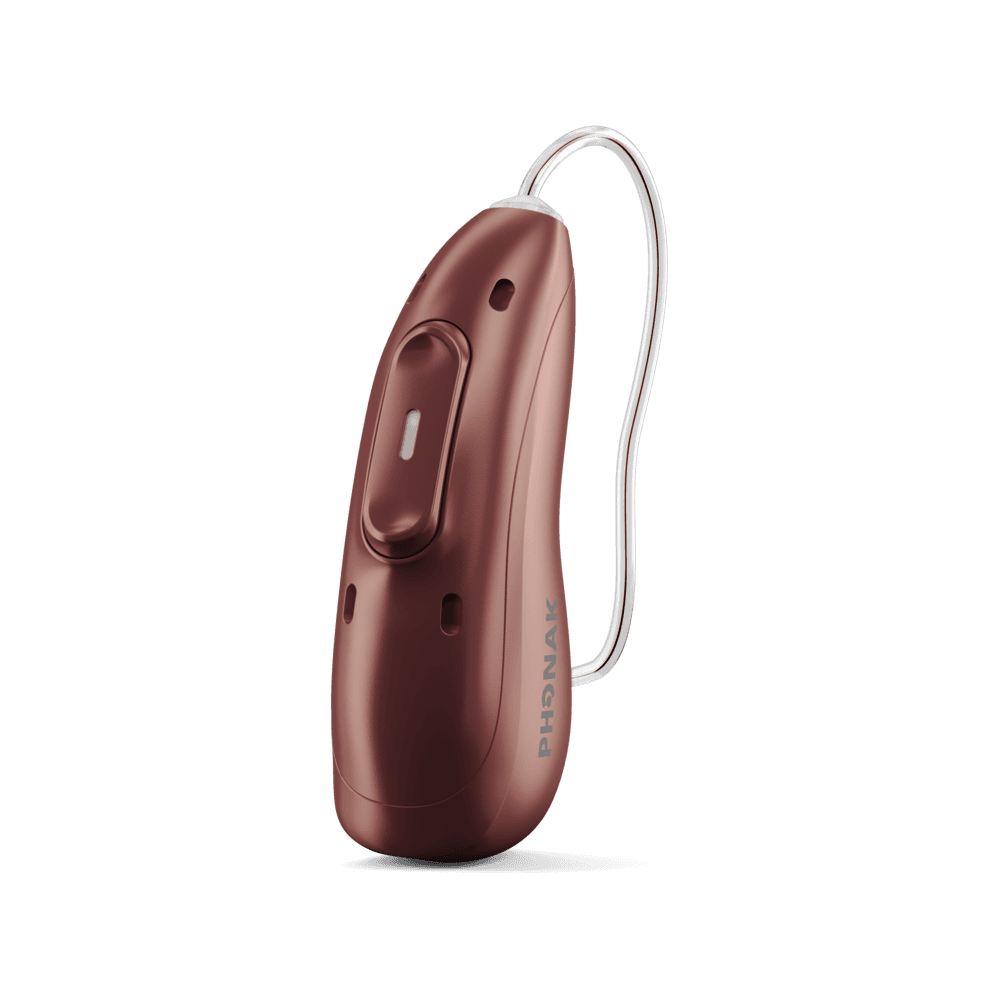
Image: Phonak, as credited in Singer Audiology's 2026 comparison.
Phonak lists EON Sphere as a rechargeable receiver-in-canal model. The body sits behind the ear, so you can compare how it shares space with your frames. Phonak lists Bluetooth and Auracast connectivity; confirm support for your phone and the exact configuration.
Our Auracast deep dive explains how the broadcast feature works and why Bluetooth support alone does not confirm compatibility.
Ask: Does the wire length let the hearing aid sit securely without pressure from my glasses? Can I remove my glasses without dislodging it?
Make Room for Both at the Fitting
Bring your everyday glasses and any sunglasses or safety glasses you use often. Put on and remove each pair while the hearing aids are in place. Check for pressure, rubbing, movement or whistling, and tell the clinician what you notice rather than accepting a painful fit.
One NHS audiology guide suggests putting the hearing aid on first, then sliding the glasses arm between the head and hearing aid. It advises against stretching the glasses around the outside of the device. Your clinician can show you a method that works for your frame and hearing aid; an optician can also check the frame fit. Do not bend the hearing aid wire or frame yourself to force the fit.
If the devices shift or cause soreness, ask for a fitting check. A professional can assess the hearing aid position and tubing or wire, and an optician can check whether the frames need adjustment. Persistent irritation deserves attention rather than a longer wait for it to settle.
Check Hearing and Features as Well as Fit
A hearing evaluation helps establish which amplification and styles are suitable. Ask about real-ear measurement: a small microphone checks the sound delivered in your ear. Then describe your daily listening goals, such as calls, restaurants or conversations at home.
Ask about charging or battery changes, cleaning, phone compatibility, total cost, trial and return terms, warranty, repairs and follow-up. A small device can have different controls and wireless features from another model in the same family. Try the options with your glasses in daily situations whenever your trial terms allow it.
If you are also comparing discreet in-ear styles, see our 2027 guide to small and discreet hearing aids.
Find a Comfortable Combination
Your glasses should not stop you from considering a range of hearing aid styles. Learn about hearing aid fitting, or request an appointment with Singer Audiology in Midtown Manhattan to discuss your hearing and frames.
Sources
- Royal United Hospitals Bath NHS Foundation Trust. Introduction to Your Hearing Aids: Wearing Glasses With Your Hearing Aids.
- National Institute on Deafness and Other Communication Disorders. Hearing Aids.
- Oticon. Introducing Oticon Zeal. January 26, 2026.
- Oticon Government Services. Oticon Zeal.
- Starkey. Introduction of Omega AI+. October 1, 2026.
- Starkey. Compare Hearing Aids.
- Phonak. Audéo EON Sphere product information (U.S.).
- American Speech-Language-Hearing Association. Hearing Aids for Adults.