Hearing Loss at NYC Sports Games in 2027
Plan how to follow the game with hearing loss, check venue listening equipment, and choose hearing protection before you arrive.
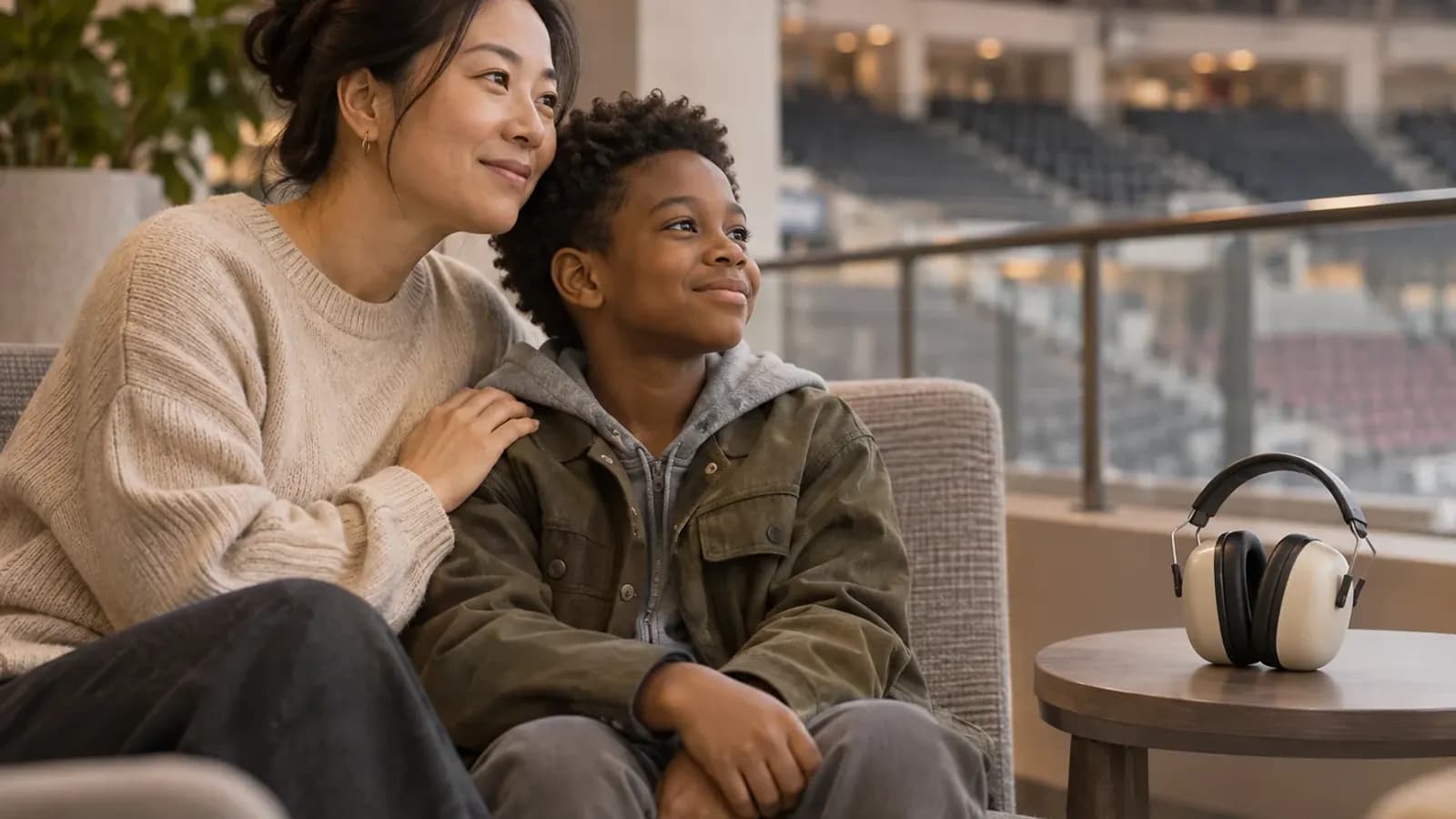
If you have hearing loss, a game-day hearing plan needs to cover two tasks. Work out how you will follow the information you want, and how you will reduce exposure to loud sound. A venue receiver may help with announcements while you still need a separate plan for crowd noise and conversation with the person beside you.
Before buying tickets for a 2027 NYC game, write down your hearing aid or implant model, the audio you want to hear, and the equipment you normally use. Send the venue a specific question about the event and seat section.
Decide What You Need to Hear
“Assistive listening” can refer to several systems. The source of the audio matters. A receiver connected to the public address system may carry stadium announcements. Game commentary can use a separate feed. Captions can provide another way to follow information when listening is difficult.
Use this short list to prepare your request.
Listening task | Ask the venue |
|---|---|
Follow announcements | Which announcements does the receiver carry, and where can I collect one? |
Follow game commentary | Is commentary available through the same receiver or a separate service? |
Read captions | Which displays or personal-device options serve this event, and can I see them from this seat? |
Use my hearing aid or implant | Which headset, neckloop, or other connection is offered? |
Talk with my companion | Where can we step away from the crowd if conversation becomes difficult? |
Assistive listening devices can work with hearing aids or cochlear implants. Compatibility depends on the venue system and the listener's equipment. NIDCD assistive listening overview
Check the Venue's Starting Point
These examples help you ask a more useful question. Confirm the current arrangements for your exact game.
Venue | Verified starting point | What to confirm for your visit |
|---|---|---|
Citi Field | The receiver carries announcements; game radio is separate. Mets guide | Audio feed, receiver connection, pickup, deposit, and caption visibility |
Yankee Stadium | Ear speakers, headsets, and neckloops are offered. Yankees guide | Connection to your device, available audio, pickup, and caption visibility |
Barclays Center | Loaner headsets and receivers are available. Published loop locations are the box office and Guest Services outside Section 12. Barclays guide | Which audio reaches your seat, and whether a neckloop or headset works with your equipment |
A service-desk hearing loop tells you where that loop is installed. Ask about the listening system for the seating area separately.
Test Your Device Connection Before You Need It
If you use a telecoil, ask your audiologist how to select its program before the visit. A telecoil receives a hearing-loop signal. Some venue receivers can send audio through a neckloop worn around the neck, provided the hearing device has a compatible, enabled telecoil. If you use a different connection, give the venue the exact equipment details and ask what it supports. NIDCD hearing loops and telecoils
At pickup, ask staff to demonstrate the receiver while your aid or implant is in the intended program. Confirm which audio you hear, how to adjust the receiver, and where to get help if it stops working. This is also the time to ask about an alternative if the supplied headset is difficult to use with your hearing device.
Choose Hearing Protection Separately From a Sensory Kit
Check whether earplugs or earmuffs are labeled as hearing protection and whether they fit you. NIOSH explains that active noise-cancelling headphones should be treated as hearing protection only when labeled with a noise reduction rating, or NRR. The rating is a laboratory measure and does not establish the protection an individual gets from a poor fit. NIOSH hearing protection guidance
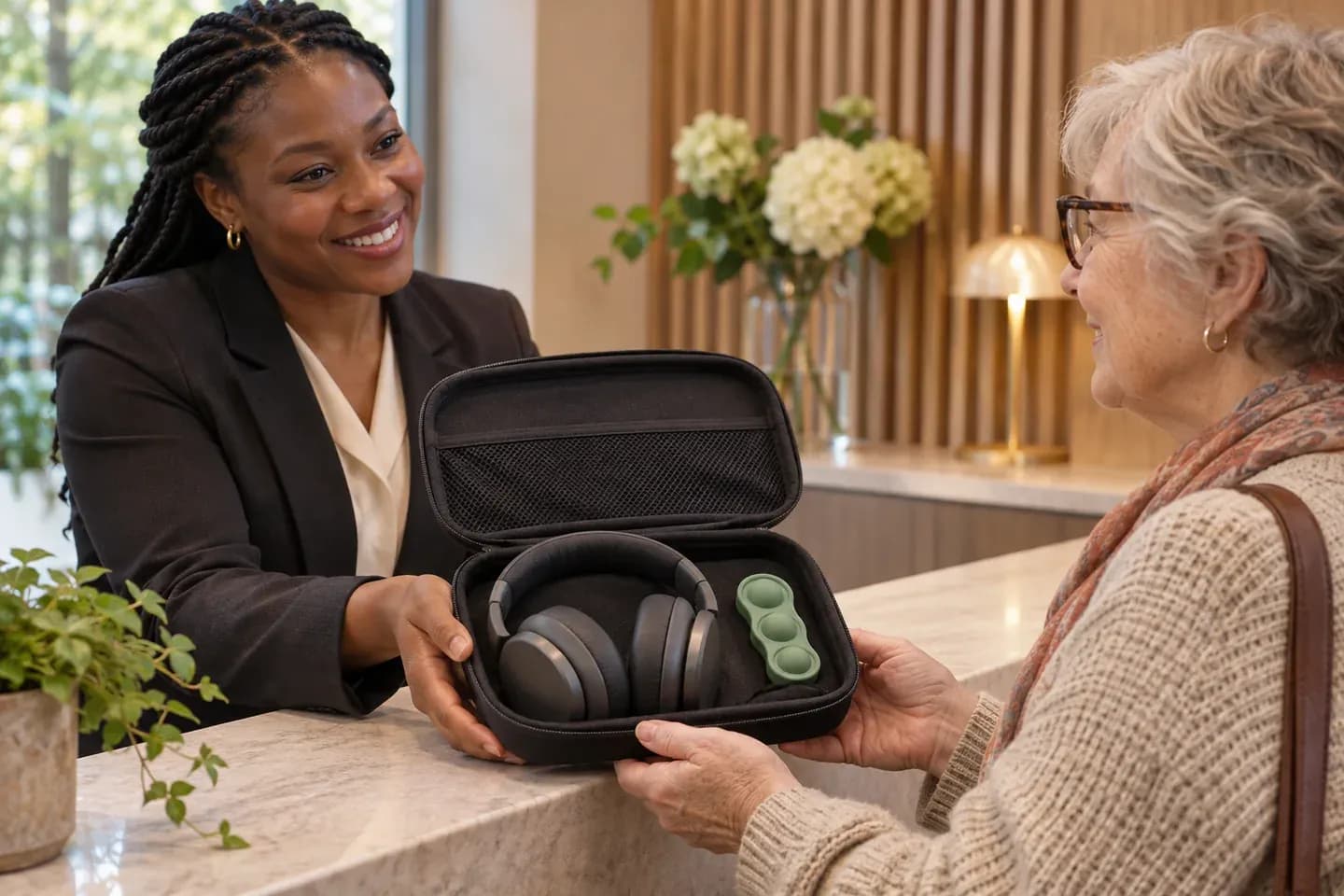
A sensory bag may contain headphones and comfort items. Ask about the specific headphones and their labeling. If you need protection from loud sound, confirm that the product is labeled for hearing protection and fits you.
If you wear hearing aids or an implant, discuss how to combine your listening needs with hearing protection. Bring the devices and protection you expect to use so an audiologist can assess fit, compatibility, and communication needs. Singer Audiology offers information about custom hearing protection.
Plan Your Seat and a Break From the Noise
Ask the venue about the location of speakers, your view of captions, and a place you can use for a break. Sound can vary with the event, seat, crowd, and nearby audio equipment. Distance from a loud source and time exposed both matter, so avoid choosing a seat on the assumption that a particular section will be safe. We have no measured sound levels for these seats. NIDCD noise and hearing guidance
Plan a route to a quieter area and take breaks from loud sound. A venue may also offer a sensory space. Check access requirements and when you may enter it. A room's description does not establish a measured sound level or replace hearing protection.
Agree with your companion on how to communicate if either person misses information. Face each other for a short conversation when practical, use text for details, and move to a quieter place for a longer discussion. Keep any caption or text option you plan to use ready before play begins.
Use a Short Game-Day Check
Before the event starts, make sure you can find the receiver desk, use the intended device program, and locate the caption display or personal text option. Check your earplug or earmuff fit. Ask where to return loaner equipment and where to get help.
If you regularly struggle with hearing at games or other group events, bring one example to your next audiology visit. Explain whether the difficulty is announcements, commentary, conversation, or loud sound. That distinction helps guide a discussion of hearing aid fitting and listening support.