How Hearing Aid Technology Has Changed Over the Last Decade
Modern hearing aids have changed dramatically smaller, clearer, more comfortable, and convenient. Discover how design & sound quality improved over the decade.
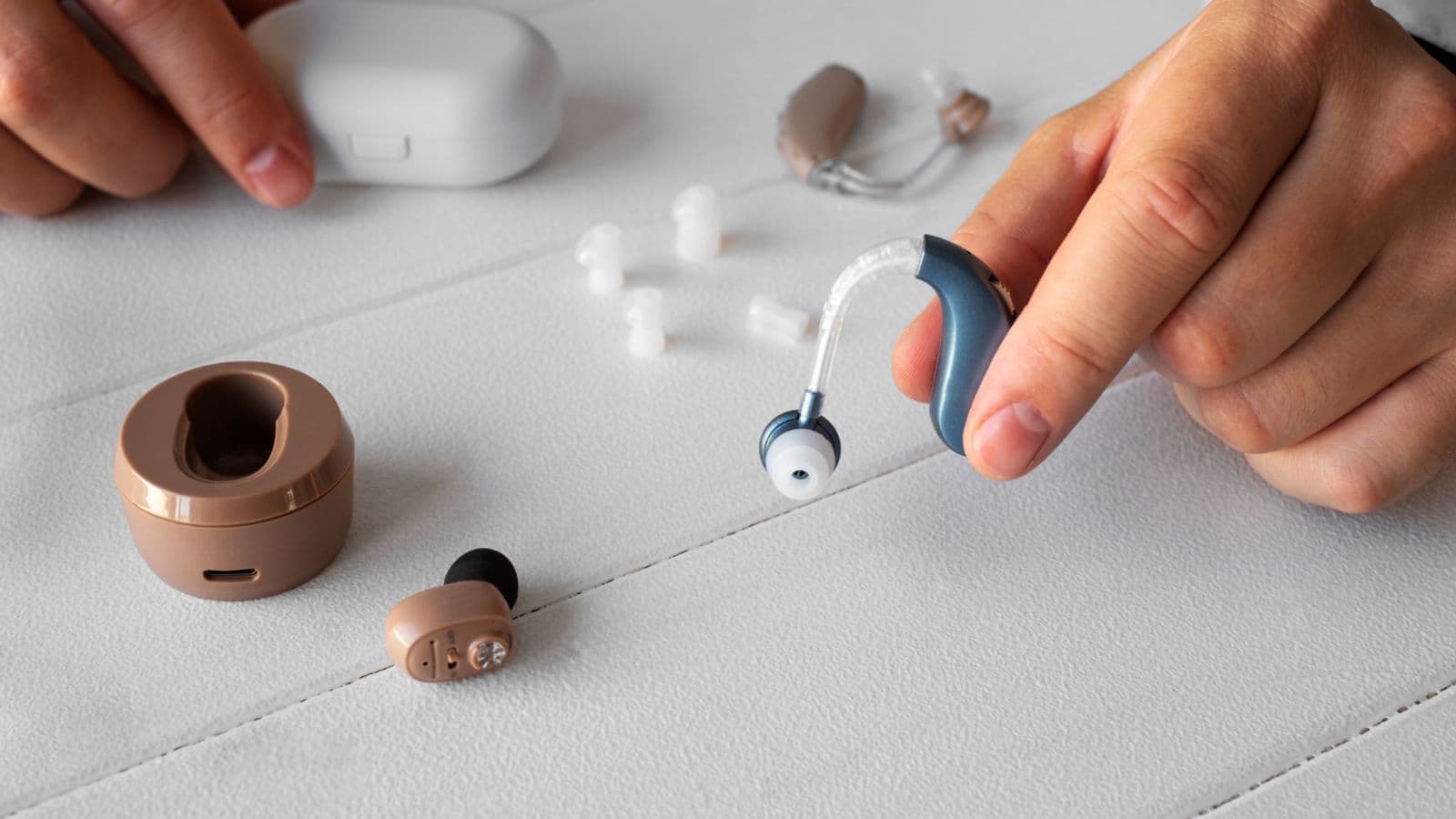
If your picture of hearing aids comes from a parent's beige device in the 1990s, or from a pair you tried yourself a decade ago and tucked into a drawer, that picture is out of date. Hearing aid technology has changed more in the last ten years than in the thirty years before it. Smaller shells, smarter processing, rechargeable batteries, direct phone streaming, and far better handling of background noise have reset what the everyday experience actually feels like.
This post walks through what is genuinely different now, and what that means for anyone who tried hearing aids before and walked away.
Why So Many People Have an Outdated Picture of Hearing Aids
Hearing aids have a long memory problem. Most people's reference point is either a relative who wore a visible behind-the-ear device years ago, or their own short trial with a pair that whistled, amplified the wrong sounds, and felt like a plastic plug in the ear.
Those impressions made sense at the time. Older hearing aids were bigger because the processors inside them were bigger. They whistled because feedback cancellation was primitive. They struggled in restaurants because they amplified everything in the room at once, voices and clattering plates alike. And they ran on tiny disposable batteries that needed swapping every few days.
The category has moved on. The devices fit differently, sound different, and behave differently in real-world settings. The frustration points people remember are the exact problems the last decade of engineering has been aimed at.
What's Changed: Size, Visibility, and Comfort
The most visible change is, well, that hearing aids are far less visible. Modern receiver-in-canal and completely-in-canal styles tuck behind or inside the ear and disappear against most skin tones and hairlines. Even traditional behind-the-ear models are a fraction of their former size, with thin clear tubing instead of the thick beige hooks people remember.
Comfort has moved along with size. Custom earpieces are now 3D-printed from a digital scan of the ear canal, which produces a much closer fit than the old impression-and-mold process. Open-fit domes let air and natural sound pass through, so the ear no longer feels stoppered up, and the wearer's own voice sounds less boomy and unfamiliar.
For anyone whose first thought is "I don't want people to see them," that concern is mostly solved. Most patients at Singer Audiology wear devices their coworkers and friends never notice.
What's Changed: Sound Quality and How Natural Hearing Aids Sound Now
Older hearing aids were essentially small amplifiers. They made the sound louder. Modern hearing aids are small computers that process sound, and the difference is significant.
Today's devices sample the surrounding environment dozens of times per second and adjust gain across different frequency bands independently. A soft consonant like an "s" or "f" can be boosted while a loud vowel stays where it is, which is how speech becomes clearer without the whole world getting louder. Music programs preserve the dynamic range and harmonics that older compression schemes flattened, so a piano sounds like a piano again.
Many premium devices now use machine learning trained on millions of hours of real-world listening environments. The hearing aid recognizes the scene, a quiet living room, a noisy restaurant, a car, a concert, and shifts its settings before the wearer has to think about it.
The practical result is that speech sounds more natural, and listening through hearing aids feels less like wearing a microphone and more like hearing the room.
What's Changed: Feedback, Whistling, and Background Noise Handling
The two complaints that drove the most people away from hearing aids, whistling and restaurant noise, have both been heavily engineered against.
Feedback cancellation now runs as a continuous algorithm inside the device. When the system detects the start of a feedback loop, the kind that used to produce that high-pitched squeal whenever someone hugged you or you put on a hat, it cancels the offending frequency in milliseconds, before it becomes audible. Most modern wearers go weeks without hearing their hearing aids whistle.
Background noise is the harder problem, and the one where the biggest gains have happened. Older hearing aids amplified everything equally, which is why a busy restaurant turned into a wall of sound. Today's devices use directional microphones that focus on the person in front of the wearer, dynamic noise reduction that softens steady background sound like an air conditioner or traffic, and, increasingly, AI-driven speech enhancement that separates voices from noise the way noise-canceling headphones separate music from a plane engine.
It is not perfect. A loud restaurant is still a loud restaurant. But the gap between unaided and aided listening in noise has narrowed dramatically.
What's Changed: Connectivity, Control, and Everyday Convenience
A decade ago, a hearing aid was a closed device. Adjustments meant a trip back to the audiologist, and the only thing the wearer controlled was a tiny volume wheel.
Now, most hearing aids connect by Bluetooth to a phone. That single change has rippled through the whole experience:
- Phone calls stream directly into both ears, with the hearing aid acting as a wireless headset.
- Music, podcasts, navigation prompts, and video audio stream the same way.
- A companion app lets the wearer adjust volume, change programs, and fine-tune settings without touching the device.
- Many clinics, Singer Audiology included, can make programming adjustments remotely once the initial fitting is done, so a follow-up tweak no longer requires a trip into Manhattan.
- Rechargeable lithium-ion batteries have largely replaced the old size-10 and size-312 disposables. A full overnight charge typically runs a full day, including streaming.
For occupational settings, telehealth visits, and the simple matter of hearing your grandchildren on a phone call, the difference is genuine.
Why Past Experience with Hearing Aids Doesn't Predict Today's Experience
If a pair of hearing aids felt unhelpful five or ten years ago, that says something about the devices and the fitting at the time. It does not say much about what a current fitting would feel like.
The technology has moved, and so has the process. A modern hearing evaluation at Singer Audiology starts with a detailed conversation about how the patient actually uses their hearing, at work, in restaurants, on calls, with family, and the fitting is built around those situations rather than a single audiogram number. Real-ear measurement verifies that the prescribed amplification is actually reaching the eardrum, which is a step many older fittings skipped entirely.
Dr. Singer takes the time to understand how you hear, and how you live. Then she finds the right solution. For someone returning to hearing aids after a long gap, that often means a quieter device, a more natural sound, and a fitting that holds up in the situations that mattered most the first time around.
To learn more about the current hearing aid options Singer Audiology fits, visit the Hearing Aids page. For a sense of how a first visit works, see What to Expect page.
Book an appointment. Call 212-914-4327 or email info@singeraudiology.com
Frequently Asked Questions
Do hearing aids still whistle or give feedback?
Rarely. Feedback cancellation is now built into the device's processing and works in real time. Most wearers can hug someone, wear a hat, or hold a phone to the ear without triggering a squeal. Persistent whistling usually points to a fit issue or wax buildup, both of which are quickly addressed at a follow-up.
Are hearing aids less noticeable than they used to be?
Yes, substantially. Receiver-in-canal styles sit behind the ear with a thin clear wire running into the canal, and completely-in-canal styles sit inside the ear and are hidden from view. Most people will not notice modern hearing aids unless they are looking for them.
If I tried hearing aids before and didn't like them, should I try again?
For most people, the honest answer is yes. The devices, the fitting process, and the verification tools have all changed. A current evaluation is the simplest way to find out whether what frustrated you the first time has actually been solved.
SOURCES:
https://www.mayoclinic.org/diseases-conditions/hearing-loss/in-depth/hearing-aids/art-20044116
https://my.clevelandclinic.org/health/treatments/24756-hearing-aids
https://www.nidcd.nih.gov/health/hearing-aids
https://www.childrenshospital.org/conditions-treatments/hearing-aids
https://www.fda.gov/medical-devices/hearing-aids/types-hearing-aids