How to Follow Conversations in a Noisy Restaurant
Restaurant noise can hide speech even when a hearing test seems normal. Try strategic seating, better lighting, visual cues, and simple conversation requests—and know when to schedule a hearing evaluation.
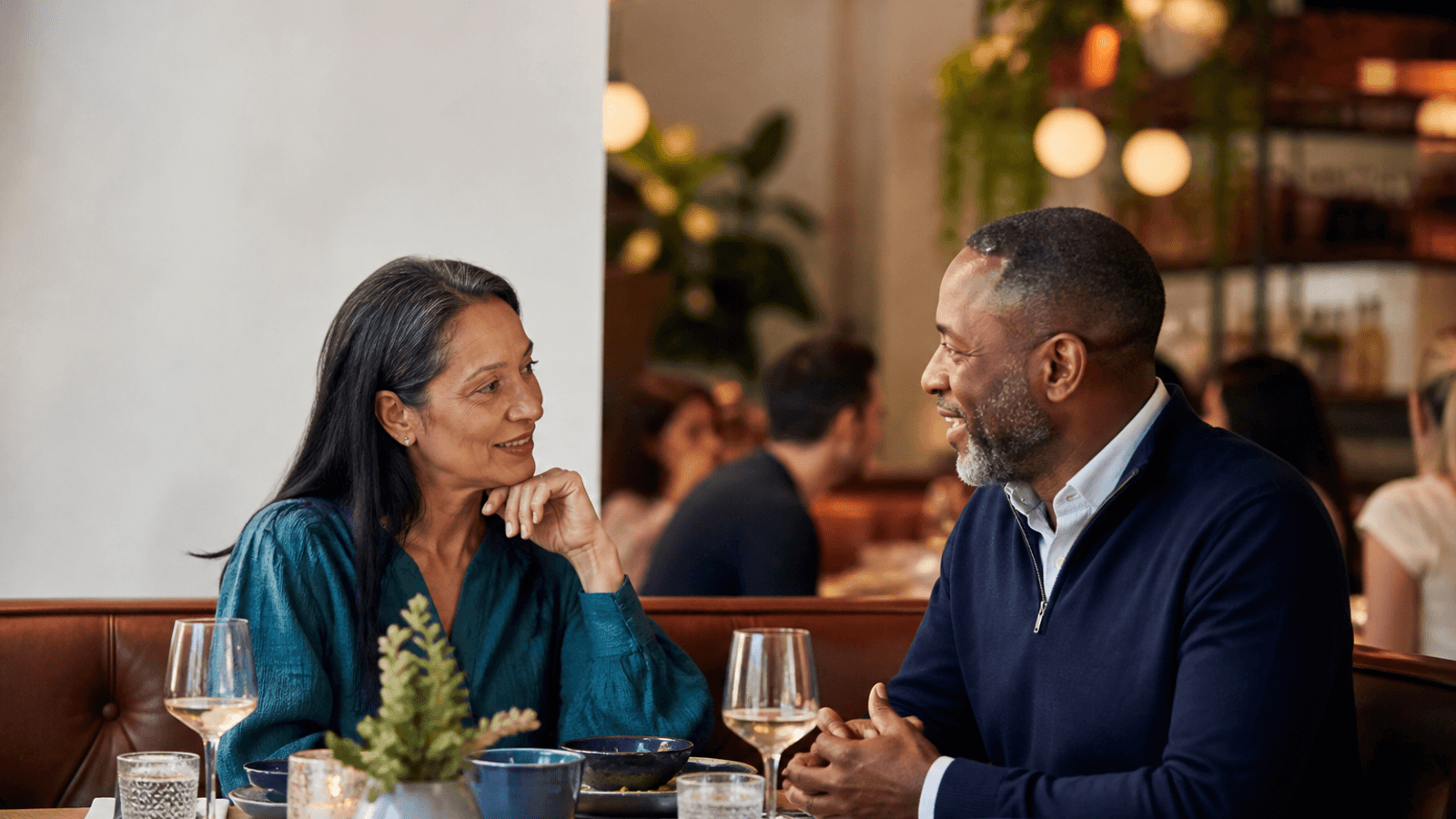
A noisy restaurant can make a familiar voice sound blurred, even when you can hear that someone is talking. The goal is not to work harder at every meal. Change the listening conditions first, then use clear communication and hearing-care support when needed.
Pick the Table Before You Sit
Ask for a table away from loudspeakers, the kitchen pass, a bar, or a large group. A wall or corner behind you can reduce the number of sounds arriving from behind, while a seat facing the room lets you see who is speaking. If the restaurant has a quieter room, patio, or early dining time, use it.
You can call ahead and ask about quieter seating. This small request is a practical accommodation, not an inconvenience.
Use Your Eyes as Well as Your Ears
Face the person you want to hear. Good lighting helps you see facial movement and other visual cues; avoid having a bright window behind the speaker. Keep glasses, masks, menus, and hands from blocking the face when possible. Visual information can support speech understanding, but it cannot replace a hearing evaluation if the problem is persistent.
The NIDCD notes that hearing aids can help make sounds louder and may improve access to speech in noise, but background sound is not completely separated and devices do not restore hearing to normal.
Set a Conversation Agreement
Tell your companions what works: “Please face me,” “one person at a time,” or “Could you say that another way?” Ask them to get your attention before speaking and to keep their voice natural rather than shouting. If you miss a sentence, repeat the part you heard and ask for the missing word. Guessing can create more confusion than a quick repair.
For a group, choose a seat near the people most likely to speak, and invite the group to pause between topics. A shared plan helps everyone participate.
Reduce Competing Sound
Turn your body toward the speaker and move your chair closer when safe. Put a phone on silent and ask staff to lower nearby music if it is reasonable. A short pause in the restroom or outside can give your attention a break. If the meal is long, plan a quieter place for dessert or conversation.
Do not turn the volume up until sound is uncomfortable. Excessive volume can be unpleasant and does not fix distorted or missing speech.
If You Use Hearing Aids
Use the program your audiologist set for speech in noise, if one is available. Check that microphones and receivers are clean, batteries or charge are adequate, and the devices are seated correctly. Remote microphones or restaurant hearing-loop systems may help some listeners; compatibility and benefit vary. Ask your audiologist to review the settings in the environments that matter to you.
If restaurant listening remains difficult despite your best strategies, a hearing evaluation can review hearing, word understanding, and device options.
When Restaurant Difficulty Deserves Attention
Schedule an evaluation if you often ask for repeats, avoid groups, turn one ear toward people, or understand much less in noise than in quiet. A normal basic hearing screen does not always explain every listening complaint; your clinician may consider speech-in-noise testing and other factors.
If your hearing drops suddenly, all at once or over a few days, get medical care immediately. Seek prompt medical care for severe dizziness, significant pain, or drainage.
If following conversations in restaurants is often difficult, try our free online hearing test. It checks how you hear tones and recognize words over background sound. It cannot diagnose or rule out hearing loss.
A Before-and-During Meal Plan
Before the meal, choose the venue and seat. At the table, face the speaker, improve lighting, and agree on one-at-a-time conversation. During the meal, ask for a rephrase, take a short break, and move if the room changes. Afterwards, note what helped. That information can guide a useful appointment rather than a vague report that “restaurants are hard.”
You can request an appointment to discuss persistent difficulty in noise and communication goals.