Do You Need a Hearing Test for Work? Occupational Hearing Evaluations Explained
Learn why occupational hearing tests matter for workplace safety and compliance. Discover what to expect, how evaluations work, and employee hearing rights.
Learn why occupational hearing tests matter for workplace safety and compliance. Discover what to expect, how evaluations work, and employee hearing rights.
Your employer just told you that you need a hearing test. Or your HR team handed you paperwork about a workplace noise exposure evaluation. If you're wondering what this actually means, and whether it's different from a routine hearing checkup, you're not alone.
An occupational hearing test is a specific type of hearing evaluation designed to protect workers in noise-exposed industries and to document baseline hearing health for legal and compliance reasons. If you work in construction, manufacturing, music venues, airport operations, or any environment where sound levels regularly exceed safe thresholds, your employer may be required to offer these tests. Here's how they work and what happens with your results.
Why Some Jobs Require Regular Hearing Evaluations
Occupational hearing tests exist because workplace noise can permanently damage hearing. OSHA (the Occupational Safety and Health Administration) sets standards to protect workers, and those standards require employers in high-noise industries to monitor hearing health.
When sound levels reach 85 decibels or higher over an 8-hour workday, hearing damage is possible. To put that in context: a lawnmower runs at about 90 decibels, and a chainsaw reaches 105 decibels. Factory floors, live music venues, and construction sites routinely exceed these levels.
The rule is straightforward. If your workplace exposes you to noise at or above 85 decibels averaged over an 8-hour day, your employer must provide a hearing conservation program. That program includes free baseline hearing tests, annual tests to track changes, hearing protection such as earplugs and earmuffs, and employee education about noise risk.
Why does your employer care? Legally, they're required to. If an employee develops hearing loss tied to workplace noise and the employer didn't provide testing or protection, the company faces liability. For you, these tests create a documented record of your hearing health: proof of your baseline, and a way to see whether workplace conditions caused any changes.
What an Occupational Hearing Test Involves
An occupational hearing test is simpler than it sounds. It isn't painful or invasive, and it usually takes 30 to 45 minutes. It moves through four stages.
Health and noise exposure history. You'll answer questions about your current job and how long you've held it, other noisy jobs you've worked, whether you have tinnitus or have noticed any hearing loss, how often you wear hearing protection, and any loud hobbies like concerts, shooting sports, or power tools. This context matters, because hearing loss can come from workplace noise but also from age, illness, or exposure outside work, and the audiologist needs the full picture.
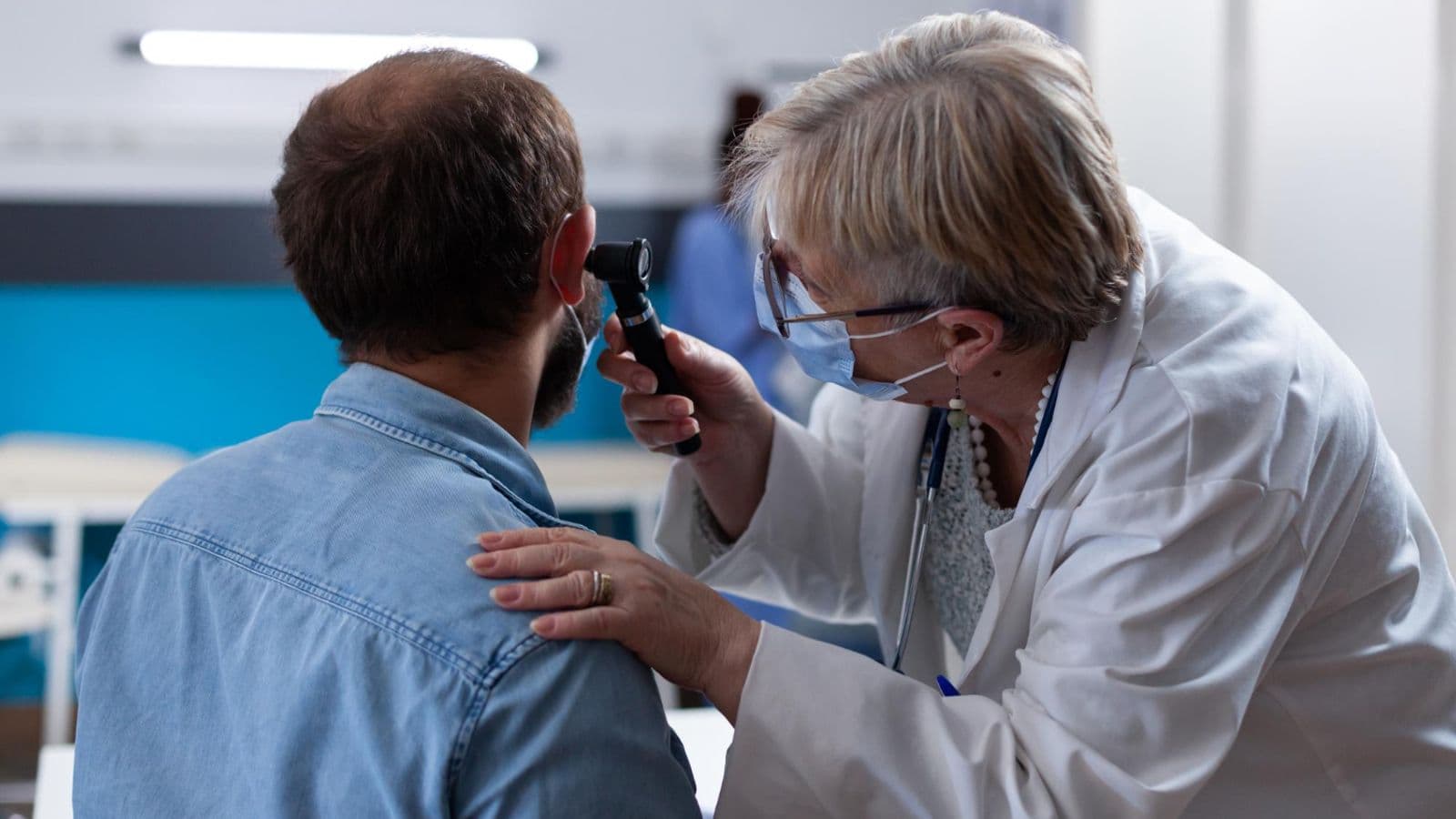
Otoscopic exam. The audiologist looks into your ear canal with an otoscope to check for earwax buildup or other issues that might affect the results. If earwax is blocking the canal, it may need to be removed first.
Audiometric testing. This is the core of the test. You'll sit in a sound-controlled booth or quiet room wearing headphones, and signal each time you hear a tone. The audiologist records which tones you can detect and at what volume, creating an audiogram, a visual map of your hearing at each frequency. The test checks both air conduction (how well sound travels through the ear) and bone conduction (how sound vibrates through skull bone to the inner ear), which gives Dr. Singer a detailed picture of how your hearing is working.
Documentation. Once testing is complete, the audiologist generates a formal report with your results, your hearing thresholds, and any recommendations. This report goes to you and to your employer, and it becomes part of the official record for your workplace hearing conservation program.
How Baseline and Annual Tests Track Changes Over Time
A single occupational hearing test matters less than the comparison between tests over time.
Your first occupational hearing test establishes your baseline, the reference point for everything that follows. A year later, or at whatever interval your employer requires, you take another test, and the new audiogram is compared directly to that baseline. The question is simple: has your hearing changed?
If the new test is within normal variation, typically within 10 decibels, your hearing is stable and no action is needed. But a change of an average of 10 decibels or more at 2000, 3000, and 4000 Hz in either ear, relative to your baseline, triggers what OSHA calls a Standard Threshold Shift, or STS. That is OSHA's definition of a meaningful change in hearing.
An STS is an early warning, and it is actionable. With that data in hand, you and your employer can increase the use of hearing protection, modify work duties or rotation to reduce exposure, explore engineering controls like quieter equipment or sound barriers, or arrange a more specialized evaluation. The baseline-to-annual comparison also documents whether any hearing loss began before your employer's program started or during it, which matters both medically and legally.
What Happens If a Test Shows a Change From Your Baseline
A Standard Threshold Shift on your annual test doesn't mean you have permanent hearing loss. It means your hearing has shifted by a measurable amount, and that shift needs to be followed up.
OSHA requires your employer to notify you in writing within 21 days of determining that an STS has occurred. The employer may also confirm the shift with a follow-up audiogram within 30 days, since the first result can sometimes be affected by background noise, earwax, or other temporary factors. Once a shift is confirmed, OSHA requires the employer to notify you, offer you a copy of the audiogram, and refer you to an audiologist or ear, nose, and throat physician for evaluation.
That's where Singer Audiology comes in. Dr. Singer can evaluate what's causing the change, rule out medical issues like an ear infection or earwax impaction, and discuss whether the shift is related to workplace noise or other factors.
From there, you have choices. If the shift is work-related, using hearing protection more consistently often prevents further loss. If it has affected your ability to follow speech or function day to day, hearing aids can help, and people of any age with hearing loss can benefit from them. Some employers can reduce your exposure by shifting you to quieter work or rotating you out of the loudest areas. Ongoing testing tracks whether your hearing stabilizes or keeps changing, giving you and your doctor clear data to guide decisions. A change in your hearing is information, and it means you have the tools to act.
How This Differs From a Routine Hearing Checkup
An occupational hearing test and a routine hearing checkup look similar on the surface. Both involve an audiogram in a quiet booth, and both measure your ability to hear tones at different frequencies. But they serve different purposes, and that changes what the audiologist is looking for.
A routine hearing evaluation is about you. You might book one because you've noticed hearing loss or tinnitus, because you want a preventive check, or because your primary care doctor referred you. The focus is your health: whether you have hearing loss, whether it affects your quality of life, and whether treatment, a tinnitus evaluation, or an ENT referral would help. The results are yours to keep, with no employer involved.
An occupational test is required by your employer as part of a hearing conservation program. Its focus is establishing a legal and medical record, detecting change over time, determining whether the workplace is causing harm, and meeting OSHA or industry compliance requirements. The results go to your employer as well as to you, and the test is designed to catch small shifts early, before hearing loss becomes severe.
The Documentation to Keep
Both employers and employees benefit from clear records. Employers keep the baseline and annual audiograms for each enrolled employee, documentation of any notification after a Standard Threshold Shift, and records of the hearing protection provided and training completed, usually through HR or the safety department.
For your own records, keep a personal copy of every audiogram and the written report that explains it, along with any referral letters and records of the hearing protection you've been issued. If you ever change jobs, file a workers' compensation claim related to hearing, or simply want to document your baseline, you'll have the history. It's yours, and your employer must provide copies on request.
If your workplace noise exceeds 85 decibels and your employer hasn't set up a formal hearing conservation program, or if you want a second opinion on your results, Singer Audiology provides occupational and legal hearing evaluations, including baseline and annual testing, interpretation of changes, and the documentation employers need to stay compliant.
Protect Your Hearing From Workplace Noise
An occupational hearing test is your chance to document your baseline and catch changes early. If you work in a noise-exposed industry, or your employer has told you it's time for an evaluation, early action is what prevents permanent hearing loss.
Book an appointment → Call: 212-914-4327
Frequently Asked Questions
Is an occupational hearing test the same as a regular hearing test?
They use the same basic method, an audiogram, but serve different purposes. A routine hearing test checks your hearing for your own medical needs. An occupational hearing test is part of a workplace hearing conservation program and creates a legal record for your employer. Occupational tests focus on detecting change over time against your baseline, while routine tests assess your overall hearing and whether treatment like hearing aids would help. Both are valuable, in different ways.
How often do workplace hearing tests need to be done?
OSHA generally requires annual testing if you work in an environment with noise exposure at or above 85 decibels over an 8-hour workday. Your employer's specific program may test more or less often depending on your industry and conditions, and your HR or safety department can tell you your schedule. Once you know when you're due, you can schedule so you don't miss the deadline.
What happens if my hearing test results have changed since my last one?
If your new test shows a Standard Threshold Shift, an average change of 10 decibels or more at 2000, 3000, and 4000 Hz compared to your baseline, your employer must notify you in writing and refer you for further evaluation. Dr. Singer will review the change, rule out temporary factors or medical issues, and discuss whether the shift appears related to workplace noise or other causes. From there, you and your employer can decide on next steps: increased hearing protection, work modifications, medical referral, or ongoing monitoring. The key is catching changes early so you can prevent further loss.